Human-in-the-Loop AI: Why It Matters
As AI becomes more embedded in Salesforce workflows, one question comes up again and again: how much control should humans keep?
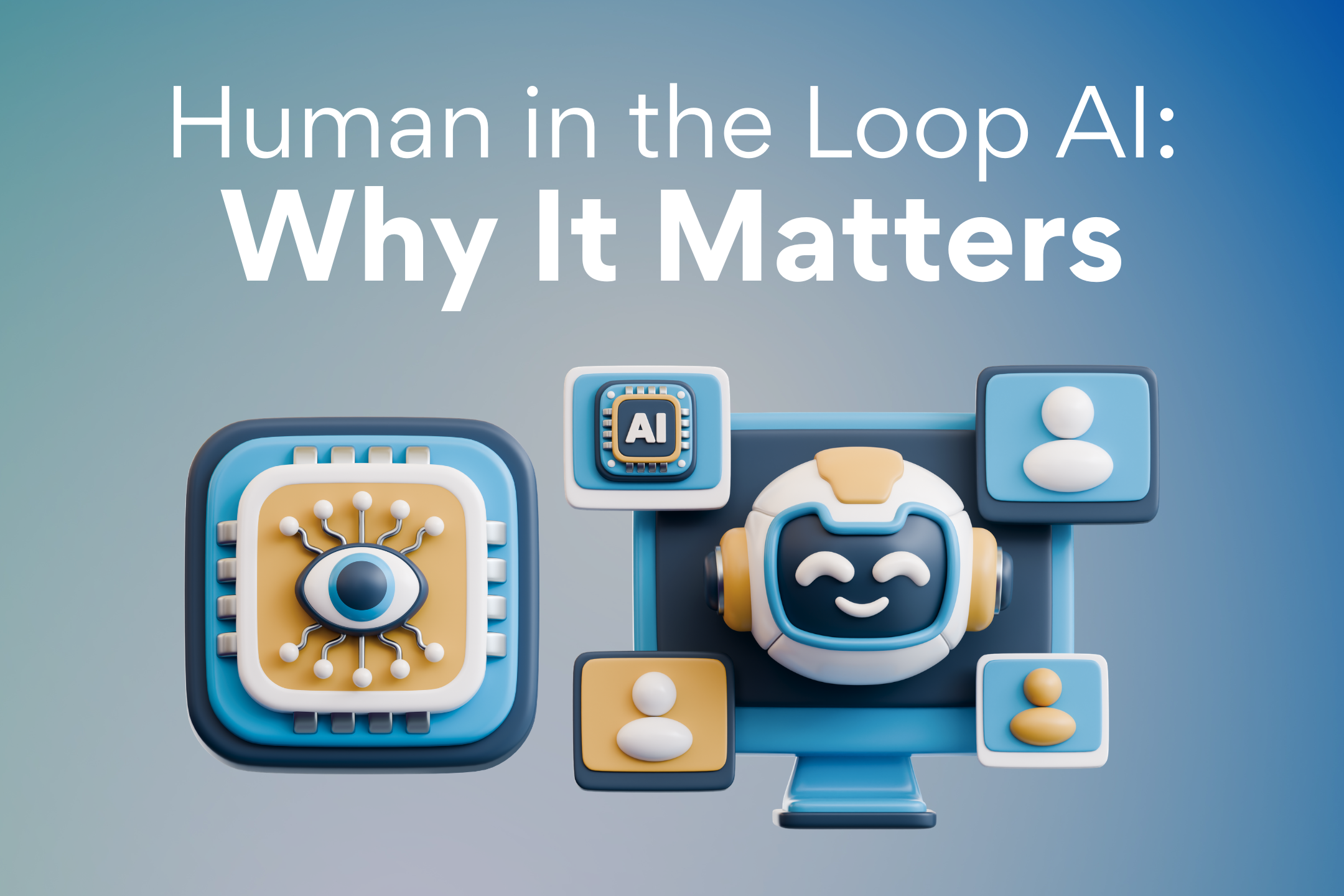
The most effective AI implementations don’t treat this as a tradeoff. They’re built on the idea that AI works best when it supports people, not when it operates independently of them. This approach is often referred to as human-in-the-loop AI, and it plays a critical role in making AI both practical and trustworthy. Rather than slowing things down, human oversight is what allows AI to be used responsibly at scale.
Why Human Oversight Matters in Salesforce AI
AI is very good at handling volume. It can read large numbers of documents, scan records for patterns, and surface relevant information quickly. What it doesn’t have is context in the human sense such as understanding nuance, risk tolerance, or the downstream impact of a decision.
That’s why oversight matters.
In Salesforce environments, AI is often working with information that directly affects customers, compliance, contracts, or operational outcomes. Even when AI outputs are accurate most of the time, the cost of a mistake can be high. Human review provides a safeguard, ensuring that AI-generated insights are validated before they’re acted on.
This oversight also builds confidence. Teams are far more likely to adopt AI when they know they remain accountable for outcomes and can see how conclusions were reached. This is especially important in situations where AI is used to reduce manual effort by preparing information, while people remain responsible for reviewing outputs and making final decisions.
What “Human-in-the-Loop” Actually Means in Practice
Human-in-the-loop AI is often misunderstood as constant manual checking. In reality, it’s about clear handoffs, not micromanagement.
In a Salesforce context, this typically looks like AI handling the first pass of work. An agent might read documents, extract key details, identify potential issues, or prepare a draft record. That output is then presented to a human user, who reviews it, makes any necessary adjustments, and approves the next step.
The AI doesn’t decide when something is “done.” It prepares the work so humans can decide faster and with better information.
This is where Agentforce moves from being generally helpful to being genuinely effective.
Why This Approach Improves Accuracy, Not Just Trust
One of the assumptions people often make about AI is that removing humans will make processes faster and more accurate. In practice, the opposite is usually true.
Human-in-the-loop systems catch edge cases that automation alone would miss. They surface ambiguity instead of hiding it. And they make it easier to identify when data quality issues or process gaps are affecting results.
In Salesforce, this leads to more reliable records, better compliance posture, and fewer downstream corrections. AI accelerates the work, but human judgment keeps it aligned with reality.
Where Human-in-the-Loop is Especially Important
Oversight is valuable in almost any AI-assisted workflow, but it’s particularly important when:
- Decisions have regulatory or compliance implications
- Information comes from unstructured or inconsistent sources
- Outputs affect customer communication or contractual commitments
- Data quality varies across systems
In these situations, AI can dramatically reduce manual effort but only when people remain involved in reviewing and approving results.
This is why many organizations intentionally design AI agents to stop short of final action. The pause isn’t a limitation; it’s a safeguard.
Human-in-the-Loop Supports Adoption, Not Resistance
Another benefit of human-in-the-loop AI is that it makes change easier for teams.
When AI is introduced as a replacement, people naturally push back. When it’s introduced as support, something that reduces workload while preserving control, adoption tends to follow more naturally.
Teams don’t have to learn to trust AI blindly. They learn to work with it, gradually, through everyday use. Over time, confidence builds not because AI is perfect, but because it’s transparent and accountable.
A Practical Way to Think About Oversight
Human-in-the-loop AI doesn’t slow Salesforce down. It keeps it grounded.
AI handles the volume. Humans handle the judgment. Together, they create workflows that are faster, more accurate, and easier to trust than either could deliver alone.
That balance is what makes AI sustainable inside Salesforce. Not just powerful, but usable.