Understanding Salesforce Qualified: AI-Powered Pipeline Generation

Understanding Salesforce Qualified: AI-Powered Pipeline Generation
AI-powered Sales Development with Salesforce Qualified

Your company’s website is often where prospective customers begin evaluating products and services. Some visitors are researching possible solutions, while others may already be comparing vendors and preparing to make a purchasing decision. Engaging those visitors while they’re actively exploring a website can create opportunities that might otherwise be missed if follow-up doesn’t occur until later.

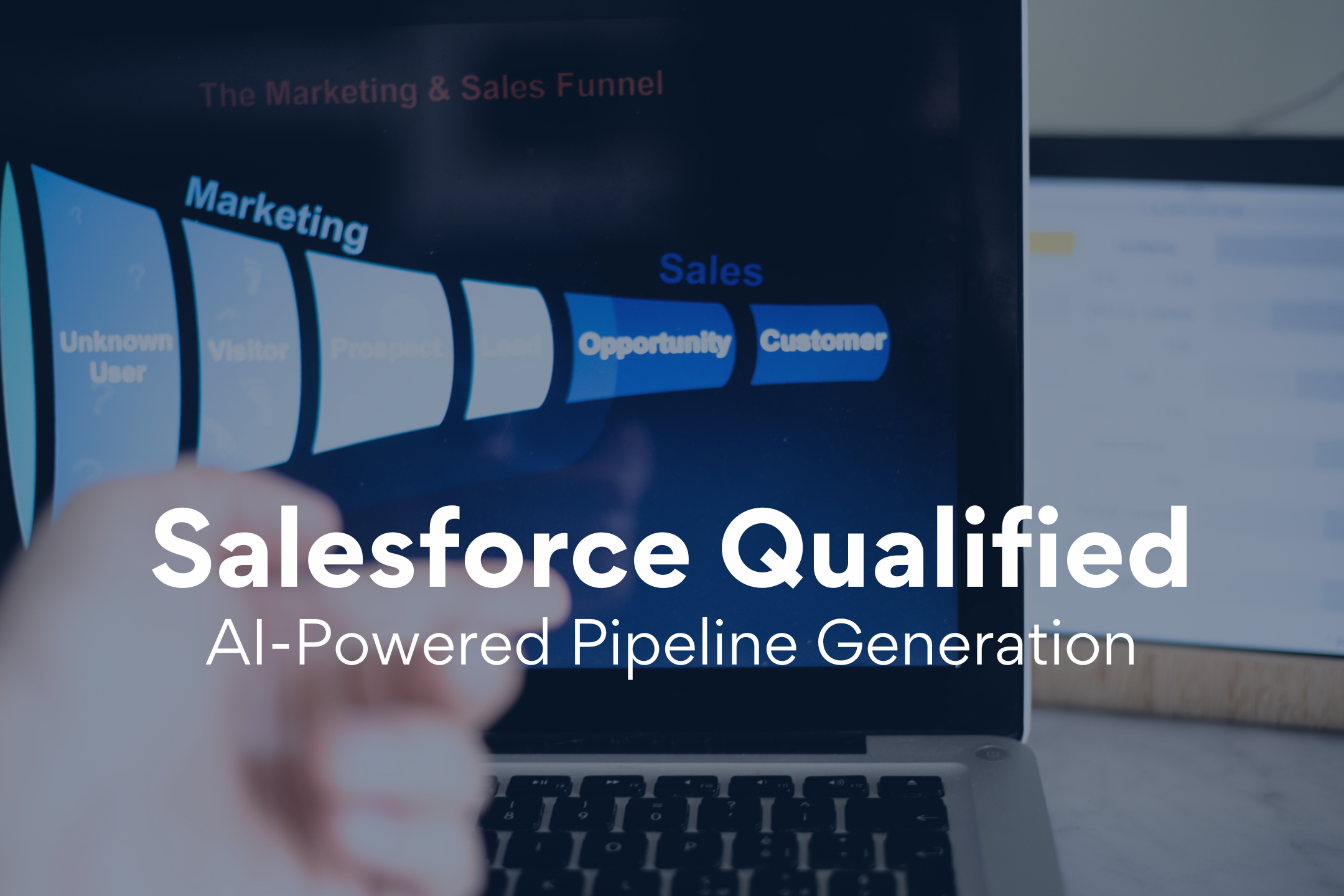
Salesforce Qualified is a pipeline generation platform designed to engage prospective customers during those early interactions. At the center of the platform is Piper, an AI-powered Sales Development Representative (SDR) that communicates with website visitors, answers questions, qualifies prospects, and schedules meetings with sales representatives.

Rather than waiting for someone to submit a form and receive a response hours or days later, Qualified allows organizations to begin conversations while visitors are still engaged with the website.

For example, a prospective customer researching a product after business hours may have questions before deciding whether to contact sales. Instead of leaving the website without taking the next step, Piper can begin a conversation, provide information using approved company content, recommend additional resources, and, when appropriate, schedule a meeting with the correct sales representative before the visitor leaves the site.

Identifying and Engaging High-Intent Buyers

Qualified combines Salesforce CRM data with real-time website activity to better understand who is visiting a company’s website.

If a visitor is already known to Salesforce through an existing lead, contact, or account, Qualified can use that information to personalize conversations rather than treating every visitor identically. Organizations can also identify target accounts and define how different visitors should be engaged based on their own sales strategy.

Using this information, Piper can begin conversations that are relevant to the visitor, answer questions using approved business content, and guide prospects toward the appropriate next step. Engaging buyers while they’re actively evaluating products or services allows organizations to begin sales conversations earlier than traditional form-based follow-up processes.

Bringing Sales Development Activities Together

Qualified hosts several sales development capabilities on a single platform rather than requiring organizations to manage separate tools for website chat, email outreach, meeting scheduling, and buyer engagement.

These capabilities include:

  • AI Conversations, which allow Piper to engage website visitors in real time and answer questions during the buying process.
  • AI Email, which enables personalized follow-up communication with inbound prospects after an initial interaction.
  • AI Meetings, allowing qualified buyers to schedule meetings directly with the appropriate sales representative without additional back-and-forth communication.
  • AI Offers, which present relevant content recommendations based on visitor interests to encourage continued engagement.
  • AI Signals, which surface buyer intent information and engagement patterns that help sales teams identify accounts demonstrating stronger purchasing interest.

Together, these capabilities create a more connected approach to sales development by combining multiple stages of early buyer engagement within a single platform.

Connected to Salesforce

Qualified is designed to work alongside Salesforce rather than operating as a separate sales application.

Because the platform uses Salesforce CRM data, conversations begin with existing business context instead of starting from scratch. Account information, lead records, contact history, and other CRM data can be used to personalize engagement and support an organization’s existing sales processes.

Activity generated through Qualified – including conversations, meetings, and prospect engagement – remains connected to Salesforce, giving sales representatives additional visibility before they ever speak with a prospective customer. Reviewing previous interactions alongside CRM records allows sales teams to enter conversations with greater context and a better understanding of buyer interests.

Extending the Sales Team

Qualified is designed to perform many of the activities traditionally handled by a Sales Development Representative during the earliest stages of the sales cycle.

Routine responsibilities such as initiating conversations, answering common questions, qualifying prospects, recommending relevant content, following up through email, and coordinating meeting scheduling can all be handled through the platform. Once a prospect is ready to engage directly with sales, Qualified helps transition that opportunity to the appropriate sales representative.

Rather than replacing sales teams, Qualified extends their capacity by maintaining consistent engagement with prospective customers while allowing representatives to focus on relationship building, solution discussions, and closing opportunities.

Final Thoughts on Salesforce Qualified

Generating pipeline depends on identifying interested buyers and engaging them while interest is highest. Qualified combines Salesforce CRM data with AI-powered conversations, personalized outreach, buyer intent signals, and automated meeting scheduling to support that objective throughout the earliest stages of the customer journey.

By bringing website engagement, sales development activities, and Salesforce together within a single platform, Qualified gives organizations another way to identify qualified opportunities and deliver more context to sales representatives before the first conversation takes place.

CloudWave: Certified Agentforce Experts

Interested in exploring how AI can support your organization? Whether you’re evaluating Agentforce, planning your AI strategy, or looking for guidance on Salesforce architecture and implementation, CloudWave can help. Our team works with organizations to design, develop, and integrate Salesforce solutions that align with real business goals.

Contact us to learn how we can help you prepare for and implement AI solutions that are secure, scalable, and built for long-term success.
Discovering Trusted AI Solutions with Salesforce AgentExchange

Discovering Trusted AI Solutions with Salesforce AgentExchange

A New Way to Find AI Solutions for Your Salesforce Environment

When organizations need new software, they don’t always have the option to build it themselves. Many start by looking for an existing solution that already meets their needs. For years, Salesforce customers have done exactly that through AppExchange. Now Salesforce is incorporating AI into the same idea with AgentExchange.

AgentExchange is Salesforce’s marketplace for AI agents, agent actions, templates, and partner solutions built for the Salesforce ecosystem. It also brings together AppExchange, Slack Marketplace, and Agentforce resources into a single experience, making it easier to discover solutions without searching across multiple platforms.

For organizations exploring Agentforce, AgentExchange provides another way to get started by making proven AI solutions easier to find and evaluate.

More Than an AI Marketplace

AgentExchange isn’t simply a collection of AI agents. Salesforce designed the platform as a central location where customers can discover traditional Salesforce applications, AI-powered solutions, Slack integrations, and partner offerings all in one place. Rather than maintaining separate marketplaces for different technologies, customers can browse a broader range of solutions through a single experience.

For Salesforce partners, AgentExchange also provides a consistent place to publish AI solutions, making them easier for customers to discover.

Accelerating AI Development with AgentExchange

AgentExchange gives organizations access to AI agents, agent actions, templates, and integrations developed by Salesforce and trusted partners. These resources provide reusable components for common business scenarios that organizations can incorporate into broader Agentforce implementations.

Depending on an organization’s requirements, solutions discovered through AgentExchange may still require configuration, customization, integration, and testing before deployment. Rather than replacing implementation efforts, AgentExchange helps accelerate AI development by providing proven building blocks that can be adapted to existing business processes and enterprise environments.

This approach helps organizations accelerate AI development while still allowing solutions to be configured and integrated to meet specific business requirements.

Extending Agentforce Builder with AgentExchange

AgentExchange is integrated directly into Agentforce Builder, allowing developers and administrators to discover agent actions, templates, and integrations while designing AI solutions. Because these resources are available during development, teams can evaluate existing capabilities before deciding how they should be configured and incorporated into their implementation.

Salesforce also provides recommendations based on what users are building, helping teams discover relevant solutions during development instead of searching for them later.

Keeping AgentExchange within the Builder experience makes it easier for teams to evaluate available capabilities and incorporate the components that best support their implementation.

Supporting a Growing Salesforce AI Community

As more partners develop AI solutions for Salesforce, AgentExchange gives them a place to share those solutions with customers.

Organizations can browse offerings created by Salesforce and trusted partners, including industry-specific solutions and tools designed for common business processes. This allows customers to benefit from the experience of partners who have already built solutions for similar use cases while giving partners a centralized place to showcase their work.

Over time, the marketplace is expected to continue growing exponentially as more and more AI solutions become available.

AgentExchange: The Future of Salesforce AI Solutions

Organizations have more choices than ever before when they are searching for the right tools to automate business processes Some projects may require custom development, while others can begin with a trusted solution vetted by Salesforce .AgentExchange helps bring some of the most promising Agentforce tools together in one place, making it easier to discover, evaluate, and implement AI solutions within the Salesforce ecosystem.

Whether an organization is building its first AI agent or expanding an existing Agentforce implementation, having access to prebuilt solutions can help accelerate development while providing greater flexibility throughout the process.

CloudWave: Certified Agentforce Experts

Interested in exploring how AI can support your organization? Whether you’re evaluating Agentforce, planning your AI strategy, or looking for guidance on Salesforce architecture and implementation, CloudWave can help. Our team works with organizations to design, develop, and integrate Salesforce solutions that align with real business goals.

Contact us to learn how we can help you prepare for and implement AI solutions that are secure, scalable, and built for long-term success.
How Slack and Agentforce Bring Customer Context Into the Flow of Work

How Slack and Agentforce Bring Customer Context Into the Flow of Work

More Connected Collaboration Across Salesforce & Slack

Customer information rarely lives in one place. Meeting notes might be saved in one application, account history lives in Salesforce, and follow-up conversations continue in Slack. Before anyone can move work forward, someone often has to gather the pieces and make sure the team is working from the same information.

Slack and Agentforce help streamline that process by bringing CRM data, collaboration, and AI assistance into a shared workspace. Employees can access relevant Salesforce information, retrieve insights from connected business data, and complete supported tasks without constantly moving between applications.

With important information available where conversations are already happening, teams can coordinate more effectively, maintain better visibility into customer relationships, and spend less time searching for answers.

Why Context Matters

Every customer relationship is built through countless interactions, from meetings and emails to support cases and internal discussions. Over time, valuable information becomes distributed across multiple systems, making it harder for employees to quickly understand the full picture.

When teams spend time searching for updates or asking coworkers for missing details, routine work can take longer than necessary. Incomplete information can also make it more difficult to deliver consistent customer experiences or identify opportunities that might otherwise be overlooked.

Connecting Salesforce and Slack helps bring CRM records and team collaboration together, making important information easier to find when it’s needed.

Bringing Salesforce Into Everyday Conversations

Slack has become a central workspace for many organizations, while Salesforce remains the system of record for customer data. Agentforce helps bridge those environments so employees can work with CRM information without interrupting their daily workflows.

Through Salesforce Channels and Agentforce, teams can:

  • View Salesforce records alongside
  • Slack conversations
  • Access account, opportunity, case, and customer information
  • Share CRM updates with teammates more efficiently
  • Keep discussions connected to the appropriate Salesforce records Complete supported actions directly from Slack

Reducing the need to switch between applications helps teams stay focused while keeping customer information connected to ongoing conversations.

AI Assistance Within the Flow of Work

Agentforce extends these capabilities by providing AI assistance directly within Slack. Team members can ask questions about customer accounts, request summaries, retrieve information from connected business systems, or receive guidance grounded in trusted organizational data. Agentforce can also assist with supported business actions and help surface relevant information without requiring employees to manually navigate multiple systems.

Because Agentforce follows an organization’s existing Salesforce security model and permissions, responses are based on information each employee is authorized to access.

Turning Conversations Into Meaningful Customer Insights

Customer conversations often generate valuable information that can influence future interactions. Meeting notes, action items, and discussions can all provide useful context, but only if they’re easy to locate when needed.

When this information is connected across business systems, Agentforce can help employees quickly surface relevant details before a customer meeting, while preparing a proposal, or when responding to a support request. Reviewing previous conversations and related CRM data together gives teams a more complete understanding of each customer relationship and helps ensure important details aren’t overlooked.

Creating a More Connected Employee Experience

AI is becoming most valuable when it supports employees within the applications they already use every day rather than requiring them to adopt entirely new workflows.

By combining Slack, Salesforce, and Agentforce, organizations can keep collaboration, customer data, and AI assistance connected in one place. This allows employees to spend less time gathering information and more time focusing on customers, projects, and business outcomes.

Final Thoughts on Slack and Agentforce

Work doesn’t happen in a single application, and customer information shouldn’t have to either. By bringing Salesforce data, team collaboration, and AI assistance together in Slack, Agentforce helps employees access the information they need without disrupting the way they already work.

As organizations continue exploring AI, success will depend not only on what AI can do, but also on how naturally it fits into everyday workflows. Connecting CRM data with the conversations where decisions are being made helps teams collaborate more effectively, respond with greater confidence, and keep customer relationships moving forward.

CloudWave: Certified Agentforce Experts

Interested in exploring how AI can support your organization? Whether you’re evaluating Agentforce, planning your AI strategy, or looking for guidance on Salesforce architecture and implementation, CloudWave can help. Our team works with organizations to design, develop, and integrate Salesforce solutions that align with real business goals.

Contact us to learn how we can help you prepare for and implement AI solutions that are secure, scalable, and built for long-term success.
Headless 360: Rethinking How AI Interacts with Salesforce

Headless 360: Rethinking How AI Interacts with Salesforce

For years, using Salesforce meant opening a browser, logging in, and navigating screens to complete your work. Whether updating a customer record, reviewing a case, or approving a request, people interacted with Salesforce through its user interface.

Salesforce believes that model is beginning to change.

As AI agents become more capable of supporting employees and completing business tasks, they no longer need to rely on a traditional interface. They can securely access Salesforce through APIs and other platform services, allowing work to happen behind the scenes while employees continue working in the tools they already use.

That vision is the foundation of Salesforce Headless 360.

Salesforce Headless 360: Moving Beyond the Browser

Headless 360 is built around a simple idea: Salesforce shouldn’t only be accessible through its user interface.

The platform exposes Salesforce data, workflows, business logic, and development capabilities through APIs, Model Context Protocol (MCP) servers, and other platform services. This allows AI agents, developer tools, and external applications to securely retrieve information, execute business logic, and perform Salesforce actions without relying on the traditional CRM interface.

For employees, that means work can happen wherever it makes the most sense. Instead of switching between multiple applications throughout the day, AI agents can retrieve information, complete tasks, and surface results within the channels where work is already taking place.

The Conversation Becomes the Workspace

One of the most interesting concepts behind Headless 360 is that conversations themselves can become the place where work gets done.

Imagine approving a request inside Slack, reviewing customer information during a chat, or completing a workflow without opening Salesforce. Rather than asking employees to leave the conversation and navigate another application, AI agents can bring the necessary information and actions directly into that experience.

In practice, this separates where users interact with Salesforce from how Salesforce processes requests. AI agents continue using the same platform services, APIs, and business logic regardless of whether employees are working in Slack, Microsoft Teams, a mobile application, or another supported interface.

One Platform, Many Ways to Work

Although Headless 360 introduces new ways for AI agents to interact with Salesforce, it isn’t replacing the platform organizations already use.

Instead, it extends existing Salesforce capabilities by making them available through APIs, Model Context Protocol (MCP) servers, and command-line interfaces. Developers can use these interfaces to connect coding assistants, AI agents, and external applications to Salesforce. Rather than recreating business logic in separate systems, those integrations can invoke existing Salesforce workflows, permissions, and data models, helping maintain consistency across every interface where AI is being used.

For organizations that have already invested in Salesforce, this approach allows AI to build upon existing processes rather than starting over.

Supporting AI at Enterprise Scale

Headless 360 also introduces new capabilities for managing AI agents throughout their lifecycle.

Rather than simply deploying an agent and hoping for consistent results, organizations can evaluate agent behavior before launch, monitor reasoning through observability and session tracing, and compare multiple versions using A/B testing. This provides developers and administrators with greater visibility into how AI agents make decisions, invoke actions, and interact with enterprise data over time, making it easier to validate performance before broader deployment.

These capabilities reflect an important shift. Deploying an AI agent is only one step; organizations also need visibility into how those agents perform over time and confidence that they continue operating within established business policies.

Why This Matters

Headless architectures allow organizations to expose existing Salesforce functionality without duplicating business logic across multiple applications or interfaces. As AI agents begin operating across websites, collaboration platforms, development environments, and other channels, maintaining a single source of truth for data, permissions, and workflows becomes increasingly important.

Supporting those responsibilities requires more than an intelligent language model. AI also needs access to trusted business data, established workflows, and the governance organizations already rely on.

Headless 360 is Salesforce’s approach to making those enterprise capabilities available wherever work happens, rather than limiting them to a browser-based experience.

Final Thoughts on Salesforce Headless 360

Headless 360 represents a shift in how organizations expose Salesforce capabilities to AI agents and external applications.

Instead of thinking about Salesforce as a destination employees must visit, Headless 360 encourages organizations to think of Salesforce as a platform that can securely support AI agents wherever work is taking place. As businesses continue exploring Agentforce and other AI capabilities, that shift has the potential to make AI assistance more accessible, more connected, and more integrated into everyday work.

CloudWave: Certified Agentforce Experts

Interested in exploring how AI can support your organization? Whether you’re evaluating Agentforce, planning your AI strategy, or looking for guidance on Salesforce architecture and implementation, CloudWave can help. Our team works with organizations to design, develop, and integrate Salesforce solutions that align with real business goals.

Contact us to learn how we can help you prepare for and implement AI solutions that are secure, scalable, and built for long-term success.
How Agentforce Builder Makes AI Agent Development More Accessible

How Agentforce Builder Makes AI Agent Development More Accessible

Every organization has different ideas for how AI could improve daily work. The challenge isn’t always identifying the opportunity – it’s figuring out how to build an AI agent that can support it.

Salesforce designed Agentforce Builder to make that process more approachable. Teams can describe what they want an agent to accomplish using natural language, organize workflows through a visual interface, and extend functionality with code when more advanced customization is needed.

Because the platform supports multiple ways of building, administrators, business users, and developers can all contribute to the development process using the approach that best fits their role.

Starting with an Idea Instead of Code

One of the biggest differences between Agentforce Builder and traditional development is how an AI agent begins.

Builders can describe an agent’s purpose using natural language, such as the types of questions it should answer or the tasks it should complete. Agentforce Builder then helps translate those instructions into the components needed to create the agent.

For users who prefer a visual approach, the Canvas interface provides a way to organize topics, actions, and workflows without writing code. Developers can also work directly with Agent Script or extend functionality using Salesforce development tools when more advanced customization is needed.

This flexibility allows different teams to contribute throughout the development process instead of relying on a single technical resource.

Building on What Already Exists

Many organizations have already invested time in creating Salesforce Flows, Apex classes, knowledge articles, and other business resources.

Agentforce Builder is designed to work with those existing investments rather than requiring organizations to rebuild everything from scratch. Builders can connect AI agents to existing actions and business logic, allowing agents to participate in workflows that are already familiar to employees.

By building on existing Salesforce capabilities, organizations can focus more on solving business challenges and less on recreating processes that already exist.

Accelerating Development

Another advantage of Agentforce Builder is the speed at which an initial AI agent can be assembled.

Salesforce demonstrations have shown how builders can use natural language, prebuilt capabilities, and visual tools to quickly create an initial agent. Depending on the complexity of the solution, organizations may also be able to move from prototype to production in a matter of weeks. Actual implementation timelines will vary based on factors such as integrations, testing, governance, and the complexity of the use case.

The broader objective is to reduce the effort required to move from an idea to a working AI solution.

Testing Before Deployment

Creating an AI agent is only one step in the process. Before introducing it to employees or customers, organizations need confidence that it behaves as expected.

Agentforce Builder includes tools that allow teams to test conversations, review how the agent responds, and evaluate the actions it performs before deployment. This gives builders an opportunity to refine instructions, validate workflows, and make adjustments as needed.

Taking time to test an AI agent helps improve consistency while providing greater confidence before it is introduced into production environments.

Agentforce Builder Supporting Different Types of Organizations

The same development approach can be applied across a wide variety of industries and use cases.

A nonprofit may build an AI agent that answers common membership questions. A government agency might create an agent that helps applicants navigate required forms. A healthcare organization could assist employees by surfacing internal knowledge, while a sales team might build an agent that helps prepare for customer meetings.

Although the objectives are different, each example begins with the same idea: giving users a practical way to create AI agents without requiring every project to start with custom development.

Final Thoughts on Agentforce Builder

Building an AI agent is becoming more approachable, but successful implementations still depend on thoughtful planning and a clear understanding of the problem being solved.

Agentforce Builder gives organizations flexible ways to design, test, and refine AI agents while making use of existing Salesforce capabilities. Whether the goal is improving internal operations or enhancing customer experiences, the platform helps teams move from concept to implementation with tools that support users of varying technical skill levels.

CloudWave: Certified Agentforce Experts

Interested in exploring how AI can support your organization? Whether you’re evaluating Agentforce, planning your AI strategy, or looking for guidance on Salesforce architecture and implementation, CloudWave can help. Our team works with organizations to design, develop, and integrate Salesforce solutions that align with real business goals.

Contact us to learn how we can help you prepare for and implement AI solutions that are secure, scalable, and built for long-term success.
What Is Agent Script in Salesforce Agentforce Builder?

What Is Agent Script in Salesforce Agentforce Builder?

Approving a refund. Reviewing a grant application. Routing a customer support case.

Many business activities follow established rules that can’t simply be left to AI interpretation. While AI can understand requests and generate responses, organizations often need certain decisions, approvals, and workflows to follow consistent business logic.

That’s where Agent Script comes in.

Introduced as part of Salesforce Agentforce, Agent Script is the language behind every AI agent built in Agentforce Builder. It combines natural language instructions with structured business logic, giving organizations more control over how AI agents behave while preserving the flexibility that makes conversational AI so valuable.

What Is Agent Script?

Agent Script is the language used to build AI agents in Agentforce Builder. It allows builders to define workflows, variables, conditions, and actions that guide how an agent responds in different situations.

Rather than relying entirely on a large language model (LLM) to determine the next step, Agent Script makes it possible to define which parts of a process should follow established business rules and where AI can use its reasoning capabilities.

For example, Agent Script can be used to:

  • Define business rules using conditional logic.
  • Store information in variables throughout a conversation or workflow.
  • Determine when actions should be performed.
  • Control when an agent transitions to another agent or workflow.
  • Create repeatable processes while still allowing natural conversations.

The result is an AI agent that can understand users, respond conversationally, and consistently follow the organization’s intended workflow.

More Than a Developer Tool

Despite its name, Agent Script isn’t only for developers. Every AI agent created in Agentforce Builder is powered by Agent Script, regardless of how it’s built.

Users can describe the behavior they want in plain language, and Agentforce can generate the underlying Agent Script automatically. Others may prefer to use the visual Canvas interface to build workflows without working directly with code. Developers also have the option to edit the script itself for more advanced scenarios.

This flexibility allows business users and technical teams to collaborate while working from the same underlying framework.

Why Business Rules Still Matter

Large language models excel at understanding context, interpreting requests, and generating natural responses. Those strengths make them well suited for customer conversations and everyday interactions.

Business processes, however, often require additional structure. A customer service agent may need to verify a person’s identity before updating account information. A grant application may require specific documentation before it moves to review. A recruiting process may require manager approval before a candidate advances to the next stage.

These aren’t simply recommendations, they’re required steps. Agent Script gives organizations a way to define those requirements while still allowing AI to communicate naturally with users and adapt to different situations.

Finding the Right Balance

One of the biggest advantages of Agent Script is that it allows AI reasoning and business logic to work together.

AI can:

  1. Understand customer requests.
  2. Interpret context.
  3. Summarize information.
  4. Hold natural conversations.

At the same time, Agent Script can:

  1. Guide workflows.
  2. Enforce business rules.
  3. Trigger actions in the correct order.
  4. Route work based on predefined conditions.

Instead of replacing AI’s flexibility, Agent Script provides structure where consistency matters most.

Agent Script Supporting Real-World Workflows

Organizations across industries rely on structured processes every day, making Agent Script applicable to a wide variety of use cases.

For example:

– A government agency could require all mandatory documents to be validated before an application moves to review.
– A healthcare organization could ensure required verification steps are completed before certain requests are processed.
– A recruiting team could require manager approval before advancing a candidate through the hiring process.
– A customer service organization could verify warranty eligibility before authorizing a replacement.

While each organization has different requirements, the goal is the same: creating AI agents that can assist employees while operating within established business processes.

Final Thoughts on Agent Script

Building effective AI agents is more than creating better conversations. It’s about creating AI that can support real business operations.

Agent Script gives Salesforce customers another way to build AI agents that combine conversational intelligence with structured workflows. By allowing organizations to define where AI can reason freely and where business rules should guide the process, Agent Script helps create AI experiences that are both flexible and dependable. As Agentforce continues to evolve, capabilities like Agent Script will play an important role in helping organizations build AI agents that are ready for day-to-day business use.

CloudWave: Certified Agentforce Experts

Interested in exploring how AI can support your organization? Whether you’re evaluating Agentforce, planning your AI strategy, or looking for guidance on Salesforce architecture and implementation, CloudWave can help. Our team works with organizations to design, develop, and integrate Salesforce solutions that align with real business goals.

Contact us to learn how we can help you prepare for and implement AI solutions that are secure, scalable, and built for long-term success.
Why Salesforce Is Embracing Agentic Enterprise Architecture

Why Salesforce Is Embracing Agentic Enterprise Architecture

Artificial intelligence can help organizations answer questions, automate repetitive work, and assist employees with everyday tasks. But for AI to produce useful results, it needs more than a powerful model. It also needs access to reliable information, connected business systems, and clear organizational policies.

Salesforce addresses this challenge through Agentic Enterprise Architecture. Rather than being a standalone product, it’s a framework that describes how enterprise technologies can work together to support AI agents. By emphasizing trusted data, connected applications, integrations, security, identity, and governance, the framework helps create an environment where AI can operate with the context needed to support real business activities.

AI Doesn't Work in Isolation

It’s easy to think of an AI agent as a single application that answers questions or completes tasks. In reality, the quality of its responses depends heavily on the information available behind the scenes.

Suppose an employee asks an AI agent for help resolving a customer issue. To provide an accurate answer, the agent may need access to CRM records, previous support interactions, product documentation, knowledge articles, and company policies. If that information exists in disconnected systems or isn’t up to date, the AI has a limited view of the situation.

The same challenge exists across nearly every department. Whether supporting recruiting, finance, customer service, government programs, or internal operations, AI performs best when it can securely access the business information needed to complete the task.

A Connected Enterprise Matters

Salesforce’s Agentic Enterprise Architecture organizes the technologies that support enterprise AI into a connected ecosystem. Each component plays a different role, but together they provide the information, connectivity, and governance that enable AI agents to deliver reliable business outcomes.

Trusted Data

High-quality data provides the context AI needs to generate accurate responses and complete business tasks. Customer information, operational records, documents, and knowledge resources all contribute to more informed interactions.

Connected Applications and Integrations

Enterprise information is rarely stored in one application. CRM platforms, ERP systems, collaboration tools, document repositories, and other business applications each contain valuable pieces of the overall picture.

Connecting those systems allows AI agents to retrieve information across the organization instead of relying on isolated data sources. As a result, employees receive responses based on a broader understanding of the business.

Security, Identity, and Governance

Enterprise AI should follow the same controls that already exist throughout the organization.

Identity management, user permissions, governance policies, compliance requirements, and human oversight all help determine how AI accesses information and performs actions. Incorporating AI into these existing controls allows organizations to expand its use while maintaining security and accountability.

Supporting AI as Adoption Grows

Many organizations begin with a single AI initiative before expanding into additional teams or business functions.

As new AI agents are introduced, they often need to access more applications, support different workflows, and interact with a wider range of users. A connected technology environment makes it easier to support that growth by giving AI consistent access to trusted information while maintaining enterprise-wide governance.

Taking time to establish that environment also helps organizations think beyond individual AI projects and toward a broader strategy for integrating AI into day-to-day operations.

Where Agentforce Fits

Agentforce provides the tools for building AI agents that can assist employees, automate work, and support customer interactions. Agentic Enterprise Architecture focuses on the technology environment those agents depend on.

Together, these concepts encourage organizations to think about both sides of AI adoption: building capable AI agents and ensuring they have secure access to the information, systems, and governance needed to perform effectively.

Final Thoughts on Salesforce Agentic Enterprise Architecture

Enterprise AI is about more than introducing new capabilities. Long-term success depends on how well AI connects with the systems, information, and policies that already support the business.

Salesforce’s Agentic Enterprise Architecture provides a framework for bringing those elements together. For organizations exploring Agentforce and other AI capabilities within Salesforce, understanding that framework can help lay the groundwork for AI initiatives that are connected, scalable, and aligned with existing business operations.

CloudWave: Certified Agentforce Experts

Interested in exploring how AI can support your organization? Whether you’re evaluating Agentforce, planning your AI strategy, or looking for guidance on Salesforce architecture and implementation, CloudWave can help. Our team works with organizations to design, develop, and integrate Salesforce solutions that align with real business goals.

Contact us to learn how we can help you prepare for and implement AI solutions that are secure, scalable, and built for long-term success.
Understanding Salesforce’s New Consulting Partner Program

Understanding Salesforce's New Consulting Partner Program

CloudWave Recognized as a Salesforce Select Tier Consulting Partner

Salesforce recently announced significant changes to its Consulting Partner Program, simplifying the structure from four tiers to two: Select Partner and Summit Partner.

As part of this updated program, CloudWave is now recognized as an official Salesforce Select Tier Consulting Partner. The Select tier includes consulting firms with demonstrated Salesforce expertise and a strong track record of customer success.

CloudWave has been a Salesforce consulting partner since 2015, supporting customers with Salesforce strategy, implementation, integration, optimization, and ongoing innovation.

What the New Partner Structure Means

Under Salesforce’s updated Consulting Partner Program, Select Partners represent verified consulting firms with demonstrated Salesforce knowledge and delivery capabilities.

The revised structure places greater emphasis on customer outcomes, certifications, competencies, and project delivery rather than complex administrative scoring systems. By reducing the number of partner tiers, Salesforce has created a simpler framework for evaluating consulting partners and identifying specialized capabilities.

For companies considering a Salesforce investment, the change offers greater clarity into the qualifications and strengths of potential consulting partners.

CloudWave's Approach to Salesforce Success

Technology initiatives deliver the most value when they are aligned with operational priorities and real-world business requirements. Rather than beginning with platform features, CloudWave focuses on how Salesforce can support the processes, workflows, and goals that matter most to each customer.

CloudWave provides Salesforce consulting services spanning design, implementation, integration, optimization, and AI automation. Our team delivers solutions tailored to specific requirements while balancing immediate priorities with future growth.

That work is supported by experienced Salesforce business analysts, project managers, architects, developers, and consultants who bring deep platform knowledge and real-world implementation experience. CloudWave currently maintains more than 70 Salesforce certifications across its team and has successfully delivered Salesforce solutions across a wide range of industries and mission areas.

As Salesforce expands its focus on AI, automation, Agentforce, and Data Cloud, CloudWave continues investing in the skills, training, certifications, and technical capabilities needed to support emerging customer requirements. These efforts help position CloudWave for continued growth within Salesforce’s partner ecosystem, including progression toward Summit Partner status.

In many environments, Salesforce serves as one part of a larger technology landscape. CloudWave has integrated Salesforce with platforms including MuleSoft, Google Cloud, Smartsheet, Oracle Database, Slack, and other enterprise technologies, helping teams connect information across systems and improve collaboration.

Our Salesforce practice also supports a broad range of platform capabilities, including Sales Cloud, Service Cloud, Marketing Cloud, Commerce Cloud, Tableau, Identity & Access Management, DevOps solutions, and custom AppExchange application development.

Experience Beyond the Tier Status

Salesforce partner status is designed to measure Salesforce-specific achievements, but it does not capture the full scope of experience a consulting firm may bring to complex enterprise programs.

Beyond our direct Salesforce engagements, CloudWave has delivered Salesforce development and implementation support alongside some of the largest system integrators on large-scale government initiatives for more than a decade.

While this work often occurs within broader program structures and therefore may not directly contribute toward Salesforce partner tier calculations, it reflects deep experience building, integrating, and supporting Salesforce solutions in highly complex environments.

Working across multi-vendor programs and enterprise-scale initiatives has given our team valuable experience navigating large stakeholder groups, integrating Salesforce with broader technology ecosystems, and delivering solutions that align with long-term modernization goals. That perspective allows us to approach Salesforce not as a standalone platform, but as part of a larger business and technology strategy.

Looking Ahead

Salesforce’s updated Consulting Partner Program reflects an increased focus on expertise, customer success, and measurable outcomes. As an official Salesforce Select Tier Consulting Partner, CloudWave remains committed to helping organizations maximize the value of their Salesforce investments through thoughtful strategy, practical implementation, and long-term support.

As businesses continue to evolve, our goal remains the same: helping customers align technology with business objectives and build solutions that support lasting success.

Whether you’re evaluating Salesforce for the first time, looking to optimize an existing environment, or planning your next phase of growth, CloudWave is here to help. Contact our team today to learn how we can support your initiatives.

Recommended Reading

What to Look for in a Salesforce AI Implementation Partner

What to Look for in a Salesforce AI Implementation Partner

As Salesforce AI becomes more accessible, more organizations are considering outside help to implement it. That’s not surprising – introducing AI into a live CRM touches data, workflows, governance, and people all at once.

But not all Salesforce partners approach AI implementation the same way. Some focus heavily on features and speed. Others take a more measured approach, prioritizing fit, oversight, and long-term usability.

Knowing what to look for in a Salesforce AI implementation partner can make the difference between a tool that looks impressive in a demo and one that actually gets used.

Recognition by Salesforce Matters, but it’s Not the Whole Story

A Salesforce-certified partnership is an important starting point. From a business perspective, it signals that Salesforce recognizes the organization’s experience with the platform and its ecosystem. It also typically means the partner has access to training, product updates, and architectural guidance that matter when working with newer capabilities like AI.

That said, certification alone doesn’t guarantee a successful AI implementation. Salesforce AI introduces new considerations around data readiness, explainability, and human oversight that go beyond traditional configuration work.

Certification opens the door. What a partner does after that is what matters.

Individual Expertise is Just as Important as Company Credentials

Beyond organizational partnership status, it’s worth paying attention to the people who will actually be working on your implementation.

Salesforce AI projects benefit from teams that include certified Salesforce developers and architects – particularly those with experience designing scalable data models, integrating external systems, and building automation that aligns with how users actually work.

Architectural judgment becomes especially important when AI agents are involved, because decisions about data access, guardrails, and review points have long-term consequences.

Strong partners can clearly explain who is responsible for design decisions, development, and oversight, and why those roles matter.

Business Analysis Should Come Before AI Configuration

One of the most common mistakes organizations make is deciding how much AI to implement before understanding where it fits.

A good Salesforce AI implementation partner starts with business analysis. That means understanding how teams use Salesforce today, where manual effort is concentrated, and which tasks genuinely benefit from AI assistance. In some cases, that may lead to a relatively small AI footprint, and that can be a good thing.

Partners should be willing to recommend restraint when appropriate. Not every workflow needs AI, and not every team benefits from the same level of automation. The goal is usefulness, not novelty.

Quality Assurance Looks Different With AI

Testing matters in any Salesforce project, but AI introduces additional complexity.

In addition to validating that tools work as expected, AI implementations require testing for accuracy, edge cases, and behavior under real-world conditions. Outputs should be reviewed, assumptions challenged, and failure modes understood before anything goes live.

A strong partner plans for this. They build in time for iterative testing, refinement, and validation – not just functional checks. This is especially important when AI agents are working with unstructured data or preparing information that feeds into downstream decisions.

Training and Adoption Determine Long-Term Success

Even well-designed AI tools can fail if teams don’t understand how to use them.

Effective Salesforce AI partners plan for knowledge transfer from the beginning. That includes training internal admins, documenting configurations, and explaining how AI outputs should be reviewed and maintained over time. When admins understand how agents work, they’re better equipped to support users, adjust configurations, and build trust across the organization.

Adoption doesn’t happen automatically. It’s earned through clarity, transparency, and support.

The Right Partner Balances Progress With Judgment

Salesforce AI has enormous potential, but it’s not a one-size-fits-all solution. The best implementation partners understand that success isn’t about deploying the most advanced tools, it’s about deploying the right ones, in the right places, with the right level of oversight.

When evaluating partners, look for teams that ask thoughtful questions, explain tradeoffs clearly, and prioritize long-term usability over short-term wins. AI introduced with judgment is far more valuable than AI introduced quickly.

That balance is what turns Salesforce AI into something teams actually rely on, not just something they technically have.

Salesforce AI Implementation with CloudWave

Choosing the right Salesforce AI implementation partner starts with understanding where your organization stands today. If you’re unsure how ready your teams, data, or workflows are for AI, taking a short Salesforce AI readiness assessment can help clarify next steps. For organizations that want to explore Salesforce AI in more depth, CloudWave is available to discuss what a thoughtful, human-centered implementation could look like based on how your teams actually use Salesforce.

You can take our AI Readiness Quiz to get a clearer picture of your current readiness, or contact CloudWave to start a conversation about next steps.

Recommended Reading

Maximizing the Value of Salesforce Agentforce

Maximizing the Value of Salesforce Agentforce

Salesforce Agentforce comes with powerful capabilities out of the box, but value doesn’t come from turning everything on at once. Organizations see the strongest results when Agentforce is introduced deliberately and aligned to real workflows, real constraints, and the way teams already use Salesforce.

Maximizing value isn’t about pushing AI further. It’s about applying it in the right places and shaping it to support how work actually gets done.

Starting with Out-of-the-Box Agentforce Capabilities

Agentforce is designed to integrate naturally into Salesforce rather than operate as a separate layer. Out of the box, it’s well suited to tasks like reading and summarizing documents, extracting key information, answering questions grounded in Salesforce data, and preparing drafts or recommendations for review.

These capabilities are most effective when they’re used to support existing workflows, not replace them. For example, letting an agent prepare summaries or flag issues before a human review step can significantly reduce effort without changing who is responsible for decisions.

Teams often see early wins by starting small, using Agentforce to assist with one or two high-friction tasks, and expanding from there as confidence grows.

Why Customization Matters

While out-of-the-box features provide a strong foundation, real value often comes from tailoring Agentforce to specific industries, data types, and organizational needs.

Different teams deal with different kinds of complexity. A healthcare organization reviewing clinical or equipment documentation has very different requirements than a government contracting team analyzing solicitations. Customization allows Agentforce to understand what matters in each context like which details to extract, which issues to flag, and where to stop and hand work back to a person.

This is where Agentforce moves from being generally helpful to being genuinely effective.

Examples of Agentforce Customized for Real Workflows

CloudWave’s Salesforce Agentforce implementations reflect this industry-specific approach.

For document-heavy environments, CloudWave’s Document Workflow Agent is designed to read unstructured files such as PDFs, scanned documents, or reports, and convert them into structured, traceable Salesforce data. Instead of asking teams to manually extract information, the agent prepares consistent outputs that users can quickly review and validate.

In healthcare compliance scenarios, CloudWave’s Healthcare Compliance Assistant applies Agentforce to regulatory and certification management. By analyzing equipment documentation inside Salesforce, it helps teams track compliance status, identify upcoming expirations, and generate audit-ready summaries while keeping approval and oversight firmly in human hands.

For government contracting teams, CloudWave’s SolicitationAI customizes Agentforce to the acquisition lifecycle. It reads solicitation documents, extracts deadlines and requirements, and can create or update Salesforce Opportunities automatically. Rather than replacing bid strategy or judgment, it removes the manual work that slows teams down and introduces risk.

Each of these examples uses the same underlying Agentforce capabilities, but applies them differently based on the work being done.

Aligning Agentforce with How Teams Work Today

One of the most common reasons AI initiatives underperform is misalignment. If Agentforce is introduced without regard for how teams already use Salesforce, it can feel intrusive or unnecessary.

Organizations that maximize value take time to understand where effort is being spent today. They look for tasks that are repetitive, document-heavy, or prone to inconsistency. They also define clear review points so people know when they’re expected to engage with AI outputs.

This alignment makes Agentforce feel like a natural extension of existing workflows rather than a new system to manage.

Scaling Thoughtfully Over Time

Agentforce doesn’t need to be perfect on day one. In fact, it works best when it evolves.

As teams interact with agents, they learn where outputs are most useful, where additional context is needed, and where AI should stop short. That feedback can be used to refine configurations, expand use cases, or adjust guardrails.

This incremental approach reduces risk and increases adoption. AI becomes something teams grow into, not something they’re asked to adapt to all at once.

Maximizing Value is About Restraint, Not Reach

The organizations that benefit the most from Salesforce Agentforce aren’t the ones that automate the most tasks. They’re the ones that apply AI with intention.

By starting with out-of-the-box capabilities, customizing agents for specific workflows, and keeping people involved in review and decision-making, Agentforce becomes a practical tool for reducing effort and improving consistency.

Recommended Reading